
Madavi Hidma, the dreaded Maoists 'commander,' was killed by security forces 12 days before the November 30 deadline set by Union Home Minister Amit Shah to eliminate the most wanted Naxalite, sources said on Tuesday.

Two undergraduate students in Pune have been booked for allegedly promoting enmity after performing a dance to a song that allegedly glorified a slain Naxal commander during a cultural event at a government-run hostel.

'From every point of view, they have faced an extremely difficult couple of years, and the setback they have suffered is irreversible.' 'This reality has begun to set in even amongst the top-level cadres. That is why, in recent times, we have witnessed a huge number of senior-level cadres emerging from the jungle and deciding to renounce violence and join the mainstream.'

Seven more Maoists were killed in an exchange of fire with police in Andhra Pradesh, a day after six Maoists were gunned down in the same area. The operation took place in Maredumilli, Alluri Sitaramaraju district. One of the deceased was identified as Meturi Jokha Rao alias Tech Shankar, a key figure in the Maoist movement.

Forty-one Naxalites, including 32 carrying a reward of Rs 1.19 crore, surrendered in Chhattisgarh's Bijapur district, citing the government's surrender policy and rehabilitation efforts.

108 Maoists surrendered in Chhattisgarh's Bastar district, yielding a large cache of weapons and cash. The surrender highlights the government's success in combating Left Wing Extremism and the weakening of Maoist ideology.

A combination of security pressure and rehabilitation efforts has significantly weakened Naxalism in India, leading to numerous surrenders and the elimination of key leaders.

Top Naxalite commander Madvi Hidma, who had masterminded several attacks over the last two decades, was killed in an encounter in neighbouring Andhra Pradesh on Tuesday, a breakthrough Chhattisgarh Police described as the 'last nail in the coffin' of the insurgency.

Top Maoist commander Thippiri Tirupati alias Devji has surrendered to police, marking a significant blow to the outlawed organisation. His surrender comes ahead of the Union government's deadline to eliminate Naxalism.
Three security personnel were killed and two others injured on Wednesday night when Naxalites blasted a police outpost building at Vishrampuri in Bastar district of Chhattisgarh.

In a significant victory for the government's anti-Naxal efforts, 108 Maoists, including 44 women, surrendered in Chhattisgarh's Bastar district, citing disillusionment and the appeal of rehabilitation programs. The surrender also led to the recovery of a large cache of weapons and valuables.
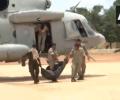
During Operation Kagar, 350 Naxalites have been killed so far, including some of the movement's top leaders.
The naxalites claimed that the Rani Bodli incident was an answer to the Salwa Judum (peace campaign) and anti-naxal operation in Bastar region.

As the March 31 deadline arrives, a wave of Maoist surrenders suggests insurgency's end, but political and social concerns remain.

The Naxalites, 10 of whom are women, turned themselves in before senior officials of the state police and the Central Reserve Police Force (CRPF), he added.
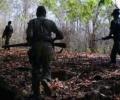
With this incident, 154 Naxalites have been gunned down by the security forces in different encounters in Chhattisgarh so far this year, the police said.

'The biggest game changer has been the belief among Maoists that they can surrender and join the mainstream'

'Political protection allow groups to recruit, rearm and operate with reduced operational pressure. That increases their bargaining power and their ability to destabilise.'

The police on Saturday claimed to have gunned down eight Maoists during an encounter in forests near Kutul-Farasbeda and Kodtameta villages in the district.

The operation was conducted between June 23 and 25, the police said.
The Nepal Maoists on Tuesday began a process for fresh recruitment to its guerrilla force to counter the move of the national army to fill vacancies, a decision that threatens to derail the fragile peace process in the Himalayan nation.
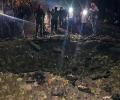
Nambala Keshav Rao alias Basavaraju, the powerful general secretary of Communist Party of India-Maoist killed in an encounter along with 26 others on Wednesday, had masterminded several major attacks on security forces in Chhattisgarh and his death is a big blow to the armed movement, said officials.

An elusive figure, Hidma is a top leader of the outlawed Naxal outfit CPI (Maoist) and has been on the radar of security agencies for many years.
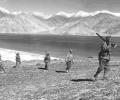
As India and China continue to face off across the Himalayas six decades later, the echoes of that earlier conflict remain unmistakable. The core of China's sensitivity lies not in maps or mountain passes, but in its perception of sovereignty over Tibet, points out Dr Kumar.

At one location, seven bodies of the troops were recovered and the tree trunks bore bullet shots, indicating that a fierce gun battle took place in the area.

India was fooled into believing that Communist China wanted a 'negotiated' settlement with the Tibetans; it was never the case, says Claude Arpi.

'The strategy of frontal organisations of the Maoists is to create unrest and ensure that such unrest leads to a law and order problem.' 'To cover such acts it was necessary to bring in a different definition of unlawful activities which is different from the definition of unlawful activities in the UAPA.'

The Maoists rained bullets from light machine guns and used low-intensity improvised explosive devices to mount the attack that went on till evening.

The deadly Maoist ambush, claiming the lives of 14 Central Reserve Police Force personnel in Chhattisgarh's Sukma district, was planned and supervised by local Naxal leaders who were reportedly camping in south Bastar for past few days, a senior police official said on Tuesday.

'The present generation, either due to historical amnesia or political propaganda, has been fed a narrative that paints India as an adversary rather than an ally.'

The Naxals used over 50 kilogram of explosives in Chhattisgarh's Sukma, about a year after a dozen jawans were killed in a similar ambush in the district.

The Maoists squad 'very discreetly with the aid of locals' kept tracking the movement of the troops when one party of 36, out of the total three, sat down for launch, the strong squad of Naxals, possessing sophisticated weapons, took them by surprise.

On the night of July 5, the Tigers launched their first kamikaze operation. Miller took the wheels of the explosive-packed truck, smiled at everyone as he turned the ignition key and drove it slowly towards the Sri Lankan military camp. A few moments later all of Jaffna heard a thunderous explosion that brought the complex crashing down in clouds of dust. Miller had given birth to a deadly tactic that Prabhakaran would employ time and again with devastating consequences to Sri Lanka -- and India. A fascinating excerpt from M R Narayan Swamy's must read new book, The Rout Of Prabhakaran.

Pakistan on Thursday said that the country's air force struck terrorist hideouts in Iran's Siestan-Balochistan province, a day after Islamabad recalled its ambassador from Tehran in the wake of Iranian missile and drone strikes in Balochistan.
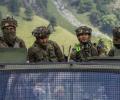
Today, the Ladakhis and Tibetans have been joined by the Sikhs, the Madrassis, the Garhwalis, the Rajputs, who are well trained psychologically and otherwise, to defend the nation, observes Claude Arpi.
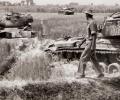
The competition for the worst or most perilous 10 years has always been between the 1960s and the 1980s, points out Shekhar Gupta.

As Prabhakaran was leaving his house, Rajiv Gandhi called his son Rahul and asked him to fetch his (Gandhi's) bulletproof jacket. He put the jacket on Prabhakaran's back and remarked with his usual charming smile: "Take care of yourself."

'The committing of the SFF into operations in Ladakh is a signal from New Delhi of how seriously it takes the Chinese intrusions and the lengths India will go to in combating them.'
